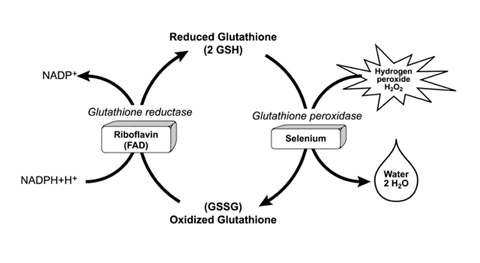
 The US Food and Nutrition Board lowered the RDA for selenium in the year 2000 from 70 mcg for men and 55 mcg/day for women to 55 mcg/day for both. |
|
Thiamine
|
|
Nominal levels too low?
|
|
Niacin "Niacin should be classified
with the amino acids since it is made
in the body from tryptophan and by definition
vitamins cannot be made in the
body; this was not known for a while and
long usage has placed it in the vitamin
camp. If it were thought of as an amino
acid the large doses so effective in many
diseases would be easier to understand" - A. Hoffer M.D., Ph.D., F.R.C.P.(C),
|
|
Ascorbate http://is.gd/Ayo2d5 |
 Vitamin D |
|
You can think of E as the oil version of C, it can be considered the primary lipid ("fat") antoixodant in the human antioxidant system. It can not be stressed enough that E, C and GSH (which has an absolute need for Selenium in its symthesis) work together. E regacrges C, C recharges E while Glutathione also recharges C. |
|
by K. Gironda
... Genetics can make this more challenging. GAD1 helps convert glutamate into the calming neurotransmitter GABA. SLC1A2 and SLC1A3 help remove glutamate from the space between neurons to prevent overstimulation. GRIN genes influence NMDA receptor activity, one of the major glutamate receptors in the brain. COMT and MAOA influence dopamine, norepinephrine, epinephrine, and serotonin metabolism, which can amplify glutamate-driven nervous system activation. MTHFR, MTR, MTRR, and BHMT influence methylation, which supports neurotransmitter production and nervous system regulation. Mitochondrial genes such as SOD2, GPX, GST, NQO1, and other antioxidant pathways influence how well brain cells tolerate oxidative stress created by excessive glutamate signaling.
|
|
N Acetyl Cysteine A glutathione precursor, N-Acetyl-Cysteine(NAC) which is derived from the amino acid L-Cysteine. |